
Wednesday, September 14, 2011


Friday, August 26, 2011

Wednesday, August 17, 2011
Monday, July 25, 2011
Tuesday, July 19, 2011
ALEC Exposed
John Nichols
The Nation
July 12, 2011
This article appeared in the August 1-8, 2011 edition
of The Nation.
http://www.thenation.com/article/161978/alec-exposed
"Never has the time been so right," Louisiana State
Representative Noble Ellington told conservative
legislators gathered in Washington to plan the radical
remaking of policies in the states. It was one month
after the 2010 midterm elections. Republicans had
grabbed 680 legislative seats and secured a power
trifecta-control of both legislative chambers and the
governorship-in twenty-one states. Ellington was
speaking for hundreds of attendees at a "States and
Nation Policy Summit," featuring GOP stars like Texas
Governor Rick Perry, former House Speaker Newt Gingrich
and House Majority Leader Eric Cantor. Convened by the
American Legislative Exchange Council (ALEC)-"the
nation's largest, non-partisan, individual public-
private membership association of state legislators," as
the spin-savvy group describes itself-the meeting did
not intend to draw up an agenda for the upcoming
legislative session. That had already been done by
ALEC's elite task forces of lawmakers and corporate
representatives. The new legislators were there to grab
their weapons: carefully crafted model bills seeking to
impose a one-size-fits-all agenda on the states.
Founded in 1973 by Paul Weyrich and other conservative
activists frustrated by recent electoral setbacks, ALEC
is a critical arm of the right-wing network of policy
shops that, with infusions of corporate cash, has
evolved to shape American politics. Inspired by Milton
Friedman's call for conservatives to "develop
alternatives to existing policies [and] keep them alive
and available," ALEC's model legislation reflects long-
term goals: downsizing government, removing regulations
on corporations and making it harder to hold the
economically and politically powerful to account.
Corporate donors retain veto power over the language,
which is developed by the secretive task forces. The
task forces cover issues from education to health
policy. ALEC's priorities for the 2011 session included
bills to privatize education, break unions, deregulate
major industries, pass voter ID laws and more. In states
across the country they succeeded, with stacks of new
laws signed by GOP governors like Ohio's John Kasich and
Wisconsin's Scott Walker, both ALEC alums.
The details of ALEC's model bills have been available
only to the group's 2,000 legislative and 300 corporate
members. But thanks to a leak to Aliya Rahman, an Ohio-
based activist who helped organize protests at ALEC's
Spring Task Force meeting in Cincinnati, The Nation has
obtained more than 800 documents representing decades of
model legislation. Teaming up with the Center for Media
and Democracy, The Nation asked policy experts to
analyze this never-before-seen archive.
The articles that follow are the first products of that
examination. They provide an inside view of the
priorities of ALEC's corporate board and billionaire
benefactors (including Tea Party funders Charles and
David Koch). "Dozens of corporations are investing
millions of dollars a year to write business-friendly
legislation that is being made into law in statehouses
coast to coast, with no regard for the public interest,"
says Bob Edgar of Common Cause. "This is proof positive
of the depth and scope of the corporate reach into our
democratic processes." The full archive of ALEC
documents is available at a new website,
alecexposed.org, thanks to the Center for Media and
Democracy, which has provided powerful tools for
progressives to turn this knowledge into power. The data
tell us that the time has come to refocus on the battle
to loosen the grip of corporate America and renew
democracy in the states.
"Business Domination Inc.," by Joel Rogers and Laura
Dresser
http://www.thenation.com/article/161977/business-domination-inc
"Sabotaging Healthcare," by Wendell Potter
http://www.thenation.com/article/161975/sabotaging-healthcare
"The Koch Connection," by Lisa Graves
http://www.thenation.com/article/161973/koch-connection
"Starving Public Schools," by Julie Underwood
http://www.thenation.com/article/161971/starving-public-schools
"Rigging Elections," by John Nichols
http://www.thenation.com/article/161969/rigging-elections
(2)
A Discreet Nonprofit Brings Together Politicians
and Corporations to Write `Model Bills'
by Lois Beckett
ProPublica
July 15, 2011
http://www.propublica.org/blog/item/a-discreet-nonprofit-brings-together-politicians-and-corporations-to-write-
Calling the EPA's attempts to regulate greenhouse gasses
a 'trainwreck,' ALEC crafted a model resolution for
states that was later the basis of legislation in at
least 13 states, according to a press release on its
website. (Saul Loeb/AFP/Getty Images)
This week, both the Los Angeles Times and The Nation put
the spotlight on a little-known but influential
conservative nonprofit that creates "model" state
legislation that often make its way into law. The
organization has helped craft some of the most
controversial-and industry-friendly-legislation of
recent years.
The American Legislative Exchange Council, ALEC, crafted
a model resolution for states calling the EPA's attempts
to regulate greenhouse gasses a "trainwreck" and asking
Congress to slow or stop the regulations, the Times
reported. A press release on ALEC's site says that at
least 13 other states have passed resolutions based on
their model language.
Latest Episode: Child abuse and death cases can be
particularly difficult to solve. Everyone wants to make
sure justice is served, but when emotions run high and
evidence can be misleading, innocent people sometimes
end up behind bars for the most heinous of crimes.
ALEC was also involved in the writing of Arizona's new
immigration law, which gave police officers broad powers
to detain anyone suspected of being in the country
illegally.
Brought into being by a legendary conservative who also
founded the well-known Heritage Foundation, ALEC has
been around since the early 1970s. It calls itself a
"policy making program that unites members of the public
and private sectors in a dynamic partnership" based on
"Jeffersonian principles." Critics say it has devolved
into a pay-for-play operation, where state legislators
and their families get to go on industry-funded junkets
and major corporations get to ghostwrite model laws and
pass them on to receptive politicians.
In a multipart report this week, the Nation profiled
ALEC's influence on state legislation related to
privatization and anti-union efforts, fighting Obama's
health care reform, privatizing public education and
enacting voter ID laws, which critics say are designed
to disenfranchise voters who are more likely to vote
Democratic. The Nation also provides a deeper look at
the financial and ideological links between the Koch
brothers and ALEC.
ALEC representatives tell reporters that its mission is
fundamentally "educational." ALEC spokeswoman Raegan
Weber told the LA Times, "Legislators should hear from
those the government intends to regulate."
"ALEC allows a place for everyone at the table to come
and debate and discuss," another ALEC official, Michael
Bowman, told NPR last year. "You have legislators who
will ask questions much more freely at our meetings
because they are not under the eyes of the press, the
eyes of the voters. They're just trying to learn a
policy and understand it." Neither Weber nor Bowman
immediately responded to our requests for further
comment.
Corporations pay hefty fees for the opportunity to
discuss policy with legislators at ALEC's conferences,
and they also host banquets, open-bar parties and
baseball games. Legislators, on the other hand, pay a
nominal membership fee, and can be eligible for
"scholarships" that pay for their conference attendance.
When the legislators bring the model bills back to their
state capitals, the role played by ALEC-or by the
corporations-seems to be rarely, if ever, disclosed.
Crucially, ALEC says it is not a lobbying organization,
and thus because of its nonprofit status, it does not
have to disclose its donors or the amount of their
donations. (The Times says Common Cause is trying to
challenge ALEC's nonprofit status.)
Perhaps the most striking example of this process is the
involvement of officials from the Corrections
Corporation of America, the nation's largest private
prison company, in the creation of Arizona's immigration
law.
As NPR reported last year, officials from Corrections
Corporation were in the room when Arizona State Sen.
Russell Pearce discussed his ideas about immigration at
a 2009 ALEC conference.
Reports from Corrections Corporation reviewed by NPR
indicated that their executives saw immigrant detention
as their next big market, and that the company expected
to bring in a "significant portion" of their revenue
from Immigrations and Custom Enforcement.
What role the corporate officials played in the ALEC
discussion is not known, but the "model legislation"
that emerged from that session soon became the bill
itself-"almost word for word," according to NPR. The
influence the private prison industry may have had on
the law was not widely reported or discussed during the
heated nationwide debate over the bill. (An "In These
Times" reporter, whose early findings on the ALEC-
Arizona connection were consistent with NPR's later
reporting, recently provided a more detailed look at the
ALEC scholarships provided to Arizona legislators.)
Portions of the Arizona law are being challenged in
federal court and have never been implemented. But, as
NPR reported last year, similar bills were later
introduced in eight other states.
ALEC has been in the media spotlight this week because
the Center for Media and Democracy obtained and released
an archive of more than 800 of ALEC's model bills and
resolutions. Their wiki site, ALEC Exposed, encourages
readers to browse ALEC's model bills by topic and share
their findings about the documents using the hashtag
#ALECexposed.
ProPublica intern Nicholas Kusnetz contributed to this
report.
___________________________________________
Portside aims to provide material of interest to people
on the left that will help them to interpret the world
and to change it.
Submit via email: portside@portside.org
Submit via the Web: http://portside.org/submittous3
Frequently asked questions: http://portside.org/faq
Sub/Unsub: http://portside.org/subscribe-and-unsubscribe
Search Portside archives: http://portside.org/archive
Contribute to Portside: https://portside.org/donate
John Nichols
The Nation
July 12, 2011
This article appeared in the August 1-8, 2011 edition
of The Nation.
http://www.thenation.com/article/161978/alec-exposed
"Never has the time been so right," Louisiana State
Representative Noble Ellington told conservative
legislators gathered in Washington to plan the radical
remaking of policies in the states. It was one month
after the 2010 midterm elections. Republicans had
grabbed 680 legislative seats and secured a power
trifecta-control of both legislative chambers and the
governorship-in twenty-one states. Ellington was
speaking for hundreds of attendees at a "States and
Nation Policy Summit," featuring GOP stars like Texas
Governor Rick Perry, former House Speaker Newt Gingrich
and House Majority Leader Eric Cantor. Convened by the
American Legislative Exchange Council (ALEC)-"the
nation's largest, non-partisan, individual public-
private membership association of state legislators," as
the spin-savvy group describes itself-the meeting did
not intend to draw up an agenda for the upcoming
legislative session. That had already been done by
ALEC's elite task forces of lawmakers and corporate
representatives. The new legislators were there to grab
their weapons: carefully crafted model bills seeking to
impose a one-size-fits-all agenda on the states.
Founded in 1973 by Paul Weyrich and other conservative
activists frustrated by recent electoral setbacks, ALEC
is a critical arm of the right-wing network of policy
shops that, with infusions of corporate cash, has
evolved to shape American politics. Inspired by Milton
Friedman's call for conservatives to "develop
alternatives to existing policies [and] keep them alive
and available," ALEC's model legislation reflects long-
term goals: downsizing government, removing regulations
on corporations and making it harder to hold the
economically and politically powerful to account.
Corporate donors retain veto power over the language,
which is developed by the secretive task forces. The
task forces cover issues from education to health
policy. ALEC's priorities for the 2011 session included
bills to privatize education, break unions, deregulate
major industries, pass voter ID laws and more. In states
across the country they succeeded, with stacks of new
laws signed by GOP governors like Ohio's John Kasich and
Wisconsin's Scott Walker, both ALEC alums.
The details of ALEC's model bills have been available
only to the group's 2,000 legislative and 300 corporate
members. But thanks to a leak to Aliya Rahman, an Ohio-
based activist who helped organize protests at ALEC's
Spring Task Force meeting in Cincinnati, The Nation has
obtained more than 800 documents representing decades of
model legislation. Teaming up with the Center for Media
and Democracy, The Nation asked policy experts to
analyze this never-before-seen archive.
The articles that follow are the first products of that
examination. They provide an inside view of the
priorities of ALEC's corporate board and billionaire
benefactors (including Tea Party funders Charles and
David Koch). "Dozens of corporations are investing
millions of dollars a year to write business-friendly
legislation that is being made into law in statehouses
coast to coast, with no regard for the public interest,"
says Bob Edgar of Common Cause. "This is proof positive
of the depth and scope of the corporate reach into our
democratic processes." The full archive of ALEC
documents is available at a new website,
alecexposed.org, thanks to the Center for Media and
Democracy, which has provided powerful tools for
progressives to turn this knowledge into power. The data
tell us that the time has come to refocus on the battle
to loosen the grip of corporate America and renew
democracy in the states.
"Business Domination Inc.," by Joel Rogers and Laura
Dresser
http://www.thenation.com/article/161977/business-domination-inc
"Sabotaging Healthcare," by Wendell Potter
http://www.thenation.com/article/161975/sabotaging-healthcare
"The Koch Connection," by Lisa Graves
http://www.thenation.com/article/161973/koch-connection
"Starving Public Schools," by Julie Underwood
http://www.thenation.com/article/161971/starving-public-schools
"Rigging Elections," by John Nichols
http://www.thenation.com/article/161969/rigging-elections
(2)
A Discreet Nonprofit Brings Together Politicians
and Corporations to Write `Model Bills'
by Lois Beckett
ProPublica
July 15, 2011
http://www.propublica.org/blog/item/a-discreet-nonprofit-brings-together-politicians-and-corporations-to-write-
Calling the EPA's attempts to regulate greenhouse gasses
a 'trainwreck,' ALEC crafted a model resolution for
states that was later the basis of legislation in at
least 13 states, according to a press release on its
website. (Saul Loeb/AFP/Getty Images)
This week, both the Los Angeles Times and The Nation put
the spotlight on a little-known but influential
conservative nonprofit that creates "model" state
legislation that often make its way into law. The
organization has helped craft some of the most
controversial-and industry-friendly-legislation of
recent years.
The American Legislative Exchange Council, ALEC, crafted
a model resolution for states calling the EPA's attempts
to regulate greenhouse gasses a "trainwreck" and asking
Congress to slow or stop the regulations, the Times
reported. A press release on ALEC's site says that at
least 13 other states have passed resolutions based on
their model language.
Latest Episode: Child abuse and death cases can be
particularly difficult to solve. Everyone wants to make
sure justice is served, but when emotions run high and
evidence can be misleading, innocent people sometimes
end up behind bars for the most heinous of crimes.
ALEC was also involved in the writing of Arizona's new
immigration law, which gave police officers broad powers
to detain anyone suspected of being in the country
illegally.
Brought into being by a legendary conservative who also
founded the well-known Heritage Foundation, ALEC has
been around since the early 1970s. It calls itself a
"policy making program that unites members of the public
and private sectors in a dynamic partnership" based on
"Jeffersonian principles." Critics say it has devolved
into a pay-for-play operation, where state legislators
and their families get to go on industry-funded junkets
and major corporations get to ghostwrite model laws and
pass them on to receptive politicians.
In a multipart report this week, the Nation profiled
ALEC's influence on state legislation related to
privatization and anti-union efforts, fighting Obama's
health care reform, privatizing public education and
enacting voter ID laws, which critics say are designed
to disenfranchise voters who are more likely to vote
Democratic. The Nation also provides a deeper look at
the financial and ideological links between the Koch
brothers and ALEC.
ALEC representatives tell reporters that its mission is
fundamentally "educational." ALEC spokeswoman Raegan
Weber told the LA Times, "Legislators should hear from
those the government intends to regulate."
"ALEC allows a place for everyone at the table to come
and debate and discuss," another ALEC official, Michael
Bowman, told NPR last year. "You have legislators who
will ask questions much more freely at our meetings
because they are not under the eyes of the press, the
eyes of the voters. They're just trying to learn a
policy and understand it." Neither Weber nor Bowman
immediately responded to our requests for further
comment.
Corporations pay hefty fees for the opportunity to
discuss policy with legislators at ALEC's conferences,
and they also host banquets, open-bar parties and
baseball games. Legislators, on the other hand, pay a
nominal membership fee, and can be eligible for
"scholarships" that pay for their conference attendance.
When the legislators bring the model bills back to their
state capitals, the role played by ALEC-or by the
corporations-seems to be rarely, if ever, disclosed.
Crucially, ALEC says it is not a lobbying organization,
and thus because of its nonprofit status, it does not
have to disclose its donors or the amount of their
donations. (The Times says Common Cause is trying to
challenge ALEC's nonprofit status.)
Perhaps the most striking example of this process is the
involvement of officials from the Corrections
Corporation of America, the nation's largest private
prison company, in the creation of Arizona's immigration
law.
As NPR reported last year, officials from Corrections
Corporation were in the room when Arizona State Sen.
Russell Pearce discussed his ideas about immigration at
a 2009 ALEC conference.
Reports from Corrections Corporation reviewed by NPR
indicated that their executives saw immigrant detention
as their next big market, and that the company expected
to bring in a "significant portion" of their revenue
from Immigrations and Custom Enforcement.
What role the corporate officials played in the ALEC
discussion is not known, but the "model legislation"
that emerged from that session soon became the bill
itself-"almost word for word," according to NPR. The
influence the private prison industry may have had on
the law was not widely reported or discussed during the
heated nationwide debate over the bill. (An "In These
Times" reporter, whose early findings on the ALEC-
Arizona connection were consistent with NPR's later
reporting, recently provided a more detailed look at the
ALEC scholarships provided to Arizona legislators.)
Portions of the Arizona law are being challenged in
federal court and have never been implemented. But, as
NPR reported last year, similar bills were later
introduced in eight other states.
ALEC has been in the media spotlight this week because
the Center for Media and Democracy obtained and released
an archive of more than 800 of ALEC's model bills and
resolutions. Their wiki site, ALEC Exposed, encourages
readers to browse ALEC's model bills by topic and share
their findings about the documents using the hashtag
#ALECexposed.
ProPublica intern Nicholas Kusnetz contributed to this
report.
___________________________________________
Portside aims to provide material of interest to people
on the left that will help them to interpret the world
and to change it.
Submit via email: portside@portside.org
Submit via the Web: http://portside.org/submittous3
Frequently asked questions: http://portside.org/faq
Sub/Unsub: http://portside.org/subscribe-and-unsubscribe
Search Portside archives: http://portside.org/archive
Contribute to Portside: https://portside.org/donate
Friday, June 10, 2011
My Review of Manning Marable's Malcolm X
The biography of Malcolm X written by Manning Marable has been the subject of great controversy on the public airwaves and in newspapers, magazines, and blogs across the globe. Even before the book was published, a loud harangue against it was heard from every direction as Black public figures denounced it as slanderous and heretical for subjects it broached that they would rather not see in the light of day, namely Malcolm's homosexual activities during his youth. Malcom's daughters took to the airwaves to condemn the book for destroying the rosy picture of their parent's marriage that was consecrated in Spike Lee's Hollywood biopic, Malcolm X. Many saw Marable's biography as a betrayal, an attack on Malcolm and his legacy. The kindest of Marable's critics diagnosed him as misguided. Very few within the Black community came to Marable's defense. Having just put the book down, I must declare that almost all of Marable's detractors truly have no basis for their assessments of the book. I would further assess that those who have most adamantly denounced this book, particularly those within the Black community and in Black activist circles, all harbor beneath their criticisms a guttural pathos deeply rooted in patriarchal coda. This book triggered in them deeply held fears concerning the public face of the reconstructed Black man who, defiled by slavery, must be defined in every manner possible as masculine and as a man, leaving no room for such things as homosexuality. In this light, any construction of Malcolm X as having same gender sexual experiences is an act of betrayal. This line of thinking was championed by Amiri Baraka who lambasted the book for 'mentioning things that are irrelevant and unfounded.' I wonder what these keepers of the flame make of the Eddie Long scandal?
Those disturbed by Marable's references to Malcolm's homosexual experiences, which constitute little more than two pages out of a five hundred page book, have sought to weed out Marable's "agenda" in airing such things. After reading the book, I find Marable to bear no agenda in his assessment of the man we know as Malcolm X except to present a truthful and complex portrait of a complex historical figure who played a major role in shaping the Afro-American community and the world at large during the 20th Century. This book is a tribute to Malcolm X and his legacy. The only agenda I can see coming forth from this book is a slight socialist bent with Marable not failing to reference such figures as Jack O'Dell and the iconic publication Freedomways. Baraka did not fail to address this either as he declared that Marable had been "duped" by communists, socialists, and other radical leftists in his writing of the book.
What this book does most successfully is answer a question I posed to Angela Davis through correspondence via email several years ago and that is what ever happened to Malcolm X's plans to take the United States before the World Court in The Hague and have the country charged with crimes against humanity for its treatment of Blacks and other minorities. Marable, perhaps for the first time in a major scholarly work, documents the fate of Malcolm's two organizations, the Islamic Moslem Mosque Inc (MMI) and the secular, political Organization for Afro-American Unity (OAAU) and their rapid decline after his assassination in 1965. Marable develops Malcolm's image as a major political force in revolutionary, Third World, and global politics as he reconstructs Malcolm's travels throughout Africa and the Middle East and his courting of African and Middle Eastern leaders such as Nasser in Egypt, Sekou Toure in Guinea, and Julius Nyerere in Tanzania in an attempt to get the newly liberated African nations to support his plan to condemn the United States before the World Court. In the end, the OAU passed a weak resolution praising the passage of civil rights legislation in the US, but criticising the slow movement of racial progress in the country. Marable paints a vivid picture of Malcolm X as a venerated dignitary and political leader hosted by the governemtns of African and Middle Eastern nations including Saudi Arabia, Morocco, and Egypt during his lifetime. He also underscores the idea that since his death, Malcolm has also been embraced by billions of muslims, Third World and African descended peoples across the globe; the government of the Ayattolah Khomeini was the first government in the world to issue a postage stamp bearing Malcolm's image. The United States government has since issued a commemorative Malcolm X stamp as well. Malcolm, in his role as a political emissary acting on his own accord, set the stage for the Black Panther Party and other Black revolutionaries in the United States that followed him who established their own political connections with governments in Africa and the Middle East, China, Cuba, and other parts of the Third World. Marable highlights the connections between Malcolm's legacy and such figures as Nelson Mandela, Fidel Castro, and Huey Newton.
Malcolm X's legacy as a leader in the struggle for civil and human rights in the United States is also clearly defined in the book. Marable draws Malcolm's image from under the shadow of Martin Luther King, that of the budding integrationist as defined in The Autobiography of Malcolm X, and definitively articulates Malcolm's basic positions that held constant throughout his lifetime. That fundamental belief can be summarized as a belief that all people have a right to self-determination and can righteously act upon that right even to the point of violent struggle. The playwright Lorraine Hansberry, a friend of Malcolm's, articulated this position well in response to a question posed to her by a white student with regards to her position on civil rights. Hansberry told the student "we must argue, beg, petition, and shoot through the windows until we get what we justly deserve." This legacy of self-actualization is Malcolm X's present to the world. Manning Marable's biiography of this venerated, iconic figure is highly commendable and should be embraced by everyone.
Those disturbed by Marable's references to Malcolm's homosexual experiences, which constitute little more than two pages out of a five hundred page book, have sought to weed out Marable's "agenda" in airing such things. After reading the book, I find Marable to bear no agenda in his assessment of the man we know as Malcolm X except to present a truthful and complex portrait of a complex historical figure who played a major role in shaping the Afro-American community and the world at large during the 20th Century. This book is a tribute to Malcolm X and his legacy. The only agenda I can see coming forth from this book is a slight socialist bent with Marable not failing to reference such figures as Jack O'Dell and the iconic publication Freedomways. Baraka did not fail to address this either as he declared that Marable had been "duped" by communists, socialists, and other radical leftists in his writing of the book.
What this book does most successfully is answer a question I posed to Angela Davis through correspondence via email several years ago and that is what ever happened to Malcolm X's plans to take the United States before the World Court in The Hague and have the country charged with crimes against humanity for its treatment of Blacks and other minorities. Marable, perhaps for the first time in a major scholarly work, documents the fate of Malcolm's two organizations, the Islamic Moslem Mosque Inc (MMI) and the secular, political Organization for Afro-American Unity (OAAU) and their rapid decline after his assassination in 1965. Marable develops Malcolm's image as a major political force in revolutionary, Third World, and global politics as he reconstructs Malcolm's travels throughout Africa and the Middle East and his courting of African and Middle Eastern leaders such as Nasser in Egypt, Sekou Toure in Guinea, and Julius Nyerere in Tanzania in an attempt to get the newly liberated African nations to support his plan to condemn the United States before the World Court. In the end, the OAU passed a weak resolution praising the passage of civil rights legislation in the US, but criticising the slow movement of racial progress in the country. Marable paints a vivid picture of Malcolm X as a venerated dignitary and political leader hosted by the governemtns of African and Middle Eastern nations including Saudi Arabia, Morocco, and Egypt during his lifetime. He also underscores the idea that since his death, Malcolm has also been embraced by billions of muslims, Third World and African descended peoples across the globe; the government of the Ayattolah Khomeini was the first government in the world to issue a postage stamp bearing Malcolm's image. The United States government has since issued a commemorative Malcolm X stamp as well. Malcolm, in his role as a political emissary acting on his own accord, set the stage for the Black Panther Party and other Black revolutionaries in the United States that followed him who established their own political connections with governments in Africa and the Middle East, China, Cuba, and other parts of the Third World. Marable highlights the connections between Malcolm's legacy and such figures as Nelson Mandela, Fidel Castro, and Huey Newton.
Malcolm X's legacy as a leader in the struggle for civil and human rights in the United States is also clearly defined in the book. Marable draws Malcolm's image from under the shadow of Martin Luther King, that of the budding integrationist as defined in The Autobiography of Malcolm X, and definitively articulates Malcolm's basic positions that held constant throughout his lifetime. That fundamental belief can be summarized as a belief that all people have a right to self-determination and can righteously act upon that right even to the point of violent struggle. The playwright Lorraine Hansberry, a friend of Malcolm's, articulated this position well in response to a question posed to her by a white student with regards to her position on civil rights. Hansberry told the student "we must argue, beg, petition, and shoot through the windows until we get what we justly deserve." This legacy of self-actualization is Malcolm X's present to the world. Manning Marable's biiography of this venerated, iconic figure is highly commendable and should be embraced by everyone.
Tuesday, May 24, 2011
Written by Ira Grupper
CCDS is greatly saddened by the news that Al Fishman of Detroit, Michigan, a life-long stalwart for peace and justice, died suddenly last week. Al served in many roles over decades of struggle. Among them, Al was state chair of the New Democratic Coalition of Michigan that supported the anti-war candidacy of Eugene McCarthy and opposed the U.S. war on Vietnam from 1966-71. He was a member of the National Board of Peace Action, a leader of Michigan Peace Action and a member of CCDS’ Peace and Solidarity Committee.
Al was a member of the Communist Party until he and hundreds of others left and formed the Committees of Correspondence in 1992. He was also a member of the Democratic Socialists of America.
Al was also my co-worker at Wayne County Community College in Detroit in the early 1970s and a friend of nearly 40 years. He was also my dear comrade and mentor. It is fitting that he had a meeting arranged with Sen. Carl Levin’s office this week. He often arranged group meetings with elected officials pressing for nuclear disarmament, an end to U.S. wars of aggression and was relied upon in matters of the peace movement by a number of elected officials. Al and his wife of 60 years who survives him, Marge Fishman, were instrumental in the campaign to elect Detroit’s first African American Mayor, Coleman Young, in 1974.
Al will always be remembered for his clarity on two important issues of strategy for the peace movement: in order to make any significant advance for peace and justice, the two most important forces for change must be joined in the struggle - labor and the African American people’s movement for equality. And secondly, the widest possible front must be formed targeting the far right-wing, particularly in the electoral arena.
Al lived his life until his very last days with this mission at the fore. He had been at a Peace Action meeting the day before he suffered a massive heart attack, complaining about a pain in his knee. His fellow Peace Action members urged him to go to the doctor the next day, where he died.
It is hard for me to believe that Al is not with us anymore. I so treasured my visits back home in Detroit to spend the afternoon with he and Margaret around the kitchen table, going through a couple pots of coffee, discussing the movement in Detroit and the world – always with optimism and resolve. I will miss him so.
There will be a memorial for Al at the church renowned for its place in the peace and justice movement - Central Methodist Church in downtown Detroit, Friday, May 25th at 12:00 noon.
Al Fishman, Presente!
Al was a member of the Communist Party until he and hundreds of others left and formed the Committees of Correspondence in 1992. He was also a member of the Democratic Socialists of America.
Al was also my co-worker at Wayne County Community College in Detroit in the early 1970s and a friend of nearly 40 years. He was also my dear comrade and mentor. It is fitting that he had a meeting arranged with Sen. Carl Levin’s office this week. He often arranged group meetings with elected officials pressing for nuclear disarmament, an end to U.S. wars of aggression and was relied upon in matters of the peace movement by a number of elected officials. Al and his wife of 60 years who survives him, Marge Fishman, were instrumental in the campaign to elect Detroit’s first African American Mayor, Coleman Young, in 1974.
Al will always be remembered for his clarity on two important issues of strategy for the peace movement: in order to make any significant advance for peace and justice, the two most important forces for change must be joined in the struggle - labor and the African American people’s movement for equality. And secondly, the widest possible front must be formed targeting the far right-wing, particularly in the electoral arena.
Al lived his life until his very last days with this mission at the fore. He had been at a Peace Action meeting the day before he suffered a massive heart attack, complaining about a pain in his knee. His fellow Peace Action members urged him to go to the doctor the next day, where he died.
It is hard for me to believe that Al is not with us anymore. I so treasured my visits back home in Detroit to spend the afternoon with he and Margaret around the kitchen table, going through a couple pots of coffee, discussing the movement in Detroit and the world – always with optimism and resolve. I will miss him so.
There will be a memorial for Al at the church renowned for its place in the peace and justice movement - Central Methodist Church in downtown Detroit, Friday, May 25th at 12:00 noon.
Al Fishman, Presente!
Saturday, May 21, 2011
Wednesday, May 18, 2011
Tuesday, May 17, 2011
Exquisite Photos from Michael Henry Adams' Homo-Harlem Post

Yesterday, I posted a link to Michael Henry Adams' post on Homosexuality in the golden age of Harlem. I hope everyone got a chance to look at it. Other than speaking about the various relationships that took place (such as that between Marlon Brando and James Baldwin), and discussing the politics concerning homosexuality at the time, he also provides some great photographs as well. I want to share some of them with you here.

James Baldwin

Marlon Brando
Adams reports that Baldwin and Brando were apparently lovers at one time.


Jimmy Daniels, singer

Jimmy Daniel's lover, Philip Johnson

Jimmy Daniel's other lover, Kenneth McPherson and his wealthy lesbian wife, Bhyner, with a friend.


Truman Capote

Archie Savage, actor and dancer
Apparently, according to Adams, Capote and Savage were also lovers.


Arthur Mitchell

Tallulah Bankhead
"My father(Governor William Bankhead of Alabama) always warned me about men and booze, but he never said a goddamned thing about women and cocaine).
Among Tallulah's many lesbian relationships was a well-known love affair with Billie Holiday.

Langston Hughes and Dorothy West
Langston Hughes was a gay man and Dorothy West was a lesbian. However, West wanted Hughes to father her child.


Langston Hughes

Cole Porter

Clifton Webb

Barbra Hutton's socialite cousin and rampant homosexual, Jimmy Donahue with the Duchess of Windsor

An early cover of Jet Magazine

Famous Performer and nightclub owner, Bricktop
Among her famous lovers was Josephine Baker.

The legendary singer and performer, Gladys Bently and photographer Prentiss Taylor
Gladys Bently was known for her larger-than-life lesbian weddings and her extravagant lifestyle. Prentiss Taylor was popular in Harlem's homosexual crowd.
Drag Balls, the most famous of which was the historic Hamilton Lodge Ball in Harlem.


Final two set of photos: Earle Hyman, the grandfather from The Cosby Show


Edward Perry, social secretary, "Harlem's Elsa Maxwell"

Friday, May 13, 2011
Ever Wondered About Who Had Open Marriages?
Check out the gallery of famous open marriages linked above. Ruby Deee and Ossie Davis....I am about to faint...
On Homosexuality in Conservative Areas
Ever since college, I have taken note of how gay men conduct themselves with regards to their sexuality and the public images of themselves. What I have observed has not been pretty. Most gay men in Alabama and in Indiana, the two places that I have observed, only expose their true selves online on such sites as gay.com or Adam4Adam. In public, their project the straightest images possible, ranging from posting pictures of themselves with women on facebook profiles to claiming to like women in every public place where asked. It baffles, befuddles, and bemuses me to observe and to see such things. I have never been one to let social orders and dogmas dictate anything I do and it truly baffles me as to why other people bow to such things. I am more likely to tell someone to go to hell. There needs to be a broad and very publicly engaged conversation about homosexuality and how homosexuality is acted out in conservative areas. I have never seen two men kiss in public in either Alabama or Indiana. Nor have I seen two women. It is time we trouble the dogmas that exist in these places and start to change the ways in which allow ourselves to exist.
Thursday, May 12, 2011
Wednesday, May 11, 2011
Monday, May 09, 2011
Friday, May 06, 2011
Monday, May 02, 2011
Best Black Film Actresses By Decade:1930s&40s
The 1930s and 40s are combined here as they represent a time when most Blacks who even managed to work as actors in Hollywood were uncredited and mostly worked as extras on screen. Those few who bursts through the racial barriers were truly bright stars, enjoying immense visibility and popularity with wider audiences and especially with the Black community. In the 1930s, most Black women who appeared on screen played maids. The first Black actress guaranteed dignified roles and winning a real contract with a major studio was Lena Horne, who signed with MGM in 1942.It was a major milestone in cinema history and in Black history. Outside of mainstream Hollywood, Oscar Mischeaux was a successful, independent Black filmmaker who spotlighted several Black actresses. Josephine Baker took her talents and went to France where she became one of the greatest superstars in the universe, admired around the world. With all of this in mind, here are the ten best actresses of the 1930s and 1940s.
1. Lena Horne

One of Hollywood's greatest icons, the legendary singer, dancer,Civil Rights activist, and actress, Lena Horne blazed the trail for Blacks in Hollywood when in 1942, she became the first Black actor to sign a contract with a major studio. Signing with MGM, she appeared in ten films during the 1940s. The most significant of these have all become classics, including, Panama Hattie,Cabin in the Sky, and Stormy Weather. The title song of Stormy Weather lent Lena her signature song, a song with which she would be identified for the rest of her life. Read a fuller biography of her here.
2. Ethel Waters

A star on Broadway and in Harlem during the 1920s, at one point the highest paid performer on stage, Ethel Waters earned the nickname of "Sweet Mama Stringbean," for her sultry and seductive persona and her performances in the theatre and on the concert stage. Establishing a career as a singer as well as an actress, Waters came into Hollywood already a star. During the 1940s, she appeared in six films, including the iconic Cabin in the Sky in 1943. In 1949, she starred in the epic race drama, Pinky.
3. Nina Mae McKinney

Nina Mae McKinney first became known as the seductress, Chick in the first all-Black musical, Hallelujah! in 1929. She remained a prominent actress throughout the 1930s, 40s, and 50s, appearing in a string of films throughout the decades, including seven films during the 1940s. In 1949, she had a supporting role in the iconic race drama, Pinky starring Ethel Waters.
4. Ethel Moses

A popular Harlem star of the 1920s, Ethel Moses began her career as a dancer and a singer and as a chorus girl on Broadway. Moses rose to cinema fame as one of the leading ladies in the films of legendary Black filmmaker Oscar Mischeaux. With Mischeaux, Moses made several classic films, including Temptation in 1935, Underworld in 1937, God's Stepchildren in 1938, and Birthright in 1939.
5. Hattie MacDaniel

The legendary Hattie McDaniel will be known to history as the first Black person ever to win an Academy Award. After enjoying a steady career in Hollywood playing a domestic, in 1939, she won a part in the classic film, Gone With the Wind playing the part of Mammy. For her performance, she was awarded the 1939 Academy Award for Best Supporting Actress. She later was heard in the iconic Amos and Andy and starred in the 1950s TV sitcom, Beulah.
6. Fredi Washington

A popular actress of the 1930s, Fredi Washington appeared in two iconic films during the decade, Emperor Jones with Paul Robeson in 1933 and Imitation of Life with Louise Beavers and Claudette Colbert in 1934.
7. Josephine Baker
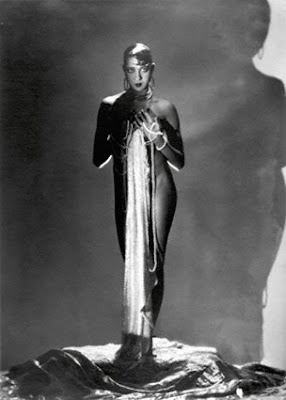
One of the world's first superstars, Josephine Baker got her start working Vaudeville and the chitlin and TOBA circuits around the country. By the time she was 15, she was on Broadway and starred in the iconic all-Black cast Broadway shows Shuffle Along in 1921 and Chocolate Dandies in 1924. Extended the opportunity to go to Paris and work, Josephine jumped at the opportunity, making her debut on the Paris stage in the classic La Revue Negre in 1925, appearing on stage wearing nothing but a string of feathers. She was an overnight sensation and proceeded to embark on a career that would land her as one of France's most treasured possessions and one of the world's greatest stars. In the middle of the Twentieth Century, Josephine Baker was the wealthiest Black woman in the world. She starred in ten films between the late 20s and the mid-fifties. Three of these became classics, Siren of the Tropics in 1927, Zou Zou in 1934, and Princess Tam Tam in 1935. After World War II, she was awarded the Croix de Guerre by the French government for her role in the French Resistance. She received the Legion of Honour in 1961. Baker was also one of the leaders of the American Civil Rights movement. At her death in 1975, she was given a state burial in Paris with full military honors.
8. Alice B. Russell
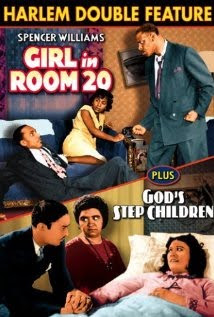
The wife of the legendary and pioneering Black filmmaker, Oscar Mischeaux (Russell is the actress in red that appears in the picture above), Alice B. Russell appeared in eleven films between the late 20s and the late forties, often appearing as the stern and wise maternal figure. Russell also worked behind the scenes as director and producer.
9. Dorothy Van Engle

Dorothy Van Engle was a popular actress in the 1930s and 1940s, one of Oscar Mischeaux's leading ladies. She starred in four of Mischeux's most popular films during the 1930s, Harlem After Midnight in 1934, Murder in Harlem in 1935, Swing in 1938, and God's Stepchildren in 1938.
10.Louise Beavers
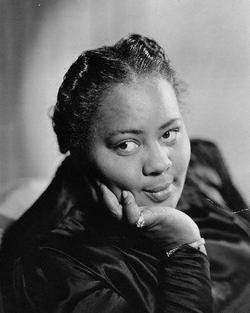
Louise Beavers enjoyed great popularity as an actress in the 1930s and 1940s, playing domestics in Hollywood films. One of the most constantly working Black actresses in Hollywood, she appeared in 133 films between 1930 and 1950. Her greatest role came in 1934 when she played Annie Johnson opposite Claudette Colbert in the original version of Imitation of Life.
Honorable Mentions:
Lucia Moses
Julia Moses
Hilda Simms
Hazel Scott
The 2000s
1. Lena Horne

One of Hollywood's greatest icons, the legendary singer, dancer,Civil Rights activist, and actress, Lena Horne blazed the trail for Blacks in Hollywood when in 1942, she became the first Black actor to sign a contract with a major studio. Signing with MGM, she appeared in ten films during the 1940s. The most significant of these have all become classics, including, Panama Hattie,Cabin in the Sky, and Stormy Weather. The title song of Stormy Weather lent Lena her signature song, a song with which she would be identified for the rest of her life. Read a fuller biography of her here.
2. Ethel Waters

A star on Broadway and in Harlem during the 1920s, at one point the highest paid performer on stage, Ethel Waters earned the nickname of "Sweet Mama Stringbean," for her sultry and seductive persona and her performances in the theatre and on the concert stage. Establishing a career as a singer as well as an actress, Waters came into Hollywood already a star. During the 1940s, she appeared in six films, including the iconic Cabin in the Sky in 1943. In 1949, she starred in the epic race drama, Pinky.
3. Nina Mae McKinney

Nina Mae McKinney first became known as the seductress, Chick in the first all-Black musical, Hallelujah! in 1929. She remained a prominent actress throughout the 1930s, 40s, and 50s, appearing in a string of films throughout the decades, including seven films during the 1940s. In 1949, she had a supporting role in the iconic race drama, Pinky starring Ethel Waters.
4. Ethel Moses

A popular Harlem star of the 1920s, Ethel Moses began her career as a dancer and a singer and as a chorus girl on Broadway. Moses rose to cinema fame as one of the leading ladies in the films of legendary Black filmmaker Oscar Mischeaux. With Mischeaux, Moses made several classic films, including Temptation in 1935, Underworld in 1937, God's Stepchildren in 1938, and Birthright in 1939.
5. Hattie MacDaniel

The legendary Hattie McDaniel will be known to history as the first Black person ever to win an Academy Award. After enjoying a steady career in Hollywood playing a domestic, in 1939, she won a part in the classic film, Gone With the Wind playing the part of Mammy. For her performance, she was awarded the 1939 Academy Award for Best Supporting Actress. She later was heard in the iconic Amos and Andy and starred in the 1950s TV sitcom, Beulah.
6. Fredi Washington

A popular actress of the 1930s, Fredi Washington appeared in two iconic films during the decade, Emperor Jones with Paul Robeson in 1933 and Imitation of Life with Louise Beavers and Claudette Colbert in 1934.
7. Josephine Baker

One of the world's first superstars, Josephine Baker got her start working Vaudeville and the chitlin and TOBA circuits around the country. By the time she was 15, she was on Broadway and starred in the iconic all-Black cast Broadway shows Shuffle Along in 1921 and Chocolate Dandies in 1924. Extended the opportunity to go to Paris and work, Josephine jumped at the opportunity, making her debut on the Paris stage in the classic La Revue Negre in 1925, appearing on stage wearing nothing but a string of feathers. She was an overnight sensation and proceeded to embark on a career that would land her as one of France's most treasured possessions and one of the world's greatest stars. In the middle of the Twentieth Century, Josephine Baker was the wealthiest Black woman in the world. She starred in ten films between the late 20s and the mid-fifties. Three of these became classics, Siren of the Tropics in 1927, Zou Zou in 1934, and Princess Tam Tam in 1935. After World War II, she was awarded the Croix de Guerre by the French government for her role in the French Resistance. She received the Legion of Honour in 1961. Baker was also one of the leaders of the American Civil Rights movement. At her death in 1975, she was given a state burial in Paris with full military honors.
8. Alice B. Russell

The wife of the legendary and pioneering Black filmmaker, Oscar Mischeaux (Russell is the actress in red that appears in the picture above), Alice B. Russell appeared in eleven films between the late 20s and the late forties, often appearing as the stern and wise maternal figure. Russell also worked behind the scenes as director and producer.
9. Dorothy Van Engle

Dorothy Van Engle was a popular actress in the 1930s and 1940s, one of Oscar Mischeaux's leading ladies. She starred in four of Mischeux's most popular films during the 1930s, Harlem After Midnight in 1934, Murder in Harlem in 1935, Swing in 1938, and God's Stepchildren in 1938.
10.Louise Beavers

Louise Beavers enjoyed great popularity as an actress in the 1930s and 1940s, playing domestics in Hollywood films. One of the most constantly working Black actresses in Hollywood, she appeared in 133 films between 1930 and 1950. Her greatest role came in 1934 when she played Annie Johnson opposite Claudette Colbert in the original version of Imitation of Life.
Honorable Mentions:
Lucia Moses
Julia Moses
Hilda Simms
Hazel Scott
The 2000s
Sunday, May 01, 2011
Best Black Film Actresses By Decade:1950s
The 1950s saw a burst of Black talent in Hollywood and in the world of entertainment in general. Seeing the start of the Civil Rights Movement, most of the better opportunities open to Blacks were found on television. Hollywood made its concessions as well, however, and several Black actresses found their names etched across the American pathos. The following are the top ten Black actresses of the 1950s.
1. Dorothy Dandridge
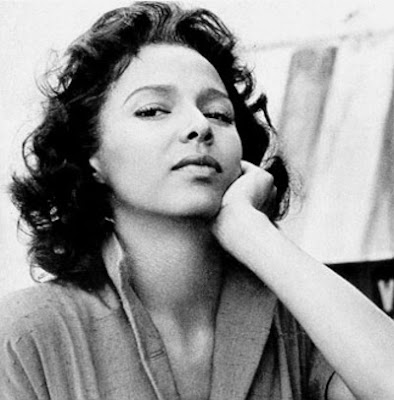
The phenomenal Dorothy Dandridge was the brightest Black star in the universe during the 1950s. A successful actress and singer, with a major career in the nightclubs and supper clubs, her first notable role during the fifties came in 1953's Bright Road, a film that was heralded by the NAACP. On landing the title role in Otto Preminger's all Black 1954 classic, Carmen Jones, Dandridge was catapulted to instant celebrity and became, for a brief time, the highest paid actress, Black or white, in Hollywood. Her performance as Carmen Jones garnered her a 1954 Oscar nomination for Best Actress in a Motion Picture. She was the first Black actress to be so honored. She had a score of other significant films after Carmen Jones, including Island in the Sun in 1957, Tamango in 1958, and Porgy and Bess in 1959. Her last major film in Hollywood was 1960's Malaga. Tragically, she died of a blood clot resulting from an injury in 1965.
2. Pearl Bailey
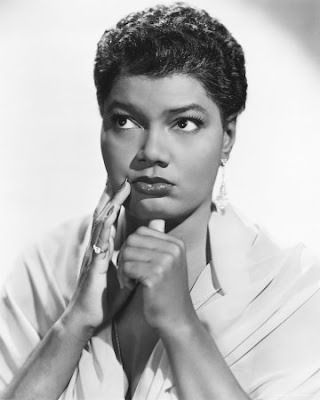
One of the most successful entertainers of all time, Pearl Bailey began her career as a successful Vaudeville and Broadway actress. By the 1950s, she had emerged in Hollywood as a popular actress and singer,landing the plum role of Frankie, the best friend, in the all Black 1954 classic Carmen Jones. She appeared in three more films that decade,including That Certain Feeling in 1956,St. Louis Blues in 1958,and Porgy and Bess in 1959.
3. Ethel Waters
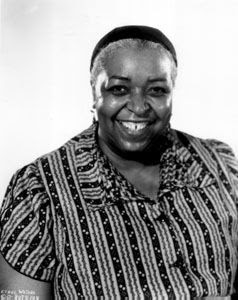
The legendary Ethel Waters was already a superstar, famous as a Vaudeville and Broadway actress and as a blues singer by the 1950s. With decades behind her in the extent of her fame, in the fifties, Waters adopted the on-screen persona of the matron and saint-a huge contrast from the reputation she had earned as a sultry and seductive Black Venus during the 1920s. She appeared in four films during the decade, The Member of the Wedding in 1952,the all-Black film Carib Gold in 1957,The Heart is a Rebel in 1958, and Sound and the Fury in 1959.
4. Juanita Moore
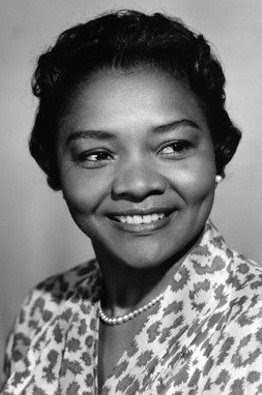
Juanita Moore rose to instant fame in 1959 playing Annie Jane Johnson, the distraught Black mother of a biracial girl who passes for white in the classic remake, Imitation of Life. She appeared in twenty films during the 1950s, mostly with uncredited appearances. Her most significant roles during the decade include Affair in Trinidad, Witness to Murder,Women's Prison,Ransom! and The Girl Can't Help It.
5. Ruby Dee
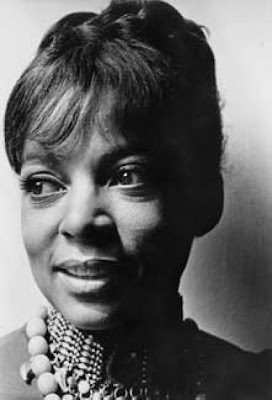
A successful Broadway actress and an outspoken Civil Rights activist, Ruby Dee started off the 1950s playing the wife of Jackie Robinson, opposite Jackie Robinson himself, in his 1950 biopic, The Jackie Robinson Story. She appeared in eight more films that decade, including No Way Out in 1950, The Tall Target in 1951, Go Man Go in 1954, The Great American Pastime in 1956, Edge of the City in 1957, St. Louis Blues in 1958, Our Virgin Island in 1959, and the iconic Take A Giant Step in 1959.
6. Beah Richards
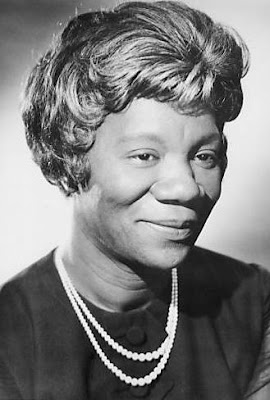
The formidable Beah Richards began her career in film during the 1950s. Her first significant role came in the iconic 1959 race drama, Take A Giant Step starring opposite Ruby Dee, Frederick O'Neal, and Johnny Nash.
7. Hazel Scott
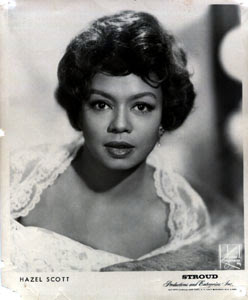
Hazel Scott was one of the most prominent African Americans of the 1930s, 40s and 50s. One of the premier pianists of her time, she traveled the world playing classical and jazz music. Scott began appearing in films in the 1940s and by the 1950s was such a popular presence that she earned the distinction of becoming the first Black woman to host her own television show, The Hazel Scott Show, which aired in 1950. Her career waned soon after the start of her television show, however, as she was blacklisted because of her criticism of McCarthyism and her public defense of friends and colleagues who had been targeted by McCarthy and because of her Civil Rights activism. In the 1950s, she appeared in two films, A Bullet in the Gun Barrel and The Night Affair, both in 1958. In 1945, Scott married New York Congressman, Adam Clayton Powell, Jr with whom she had one child,Adam Clayton Powell III. They divorced in 1956.
8. Eartha Kitt
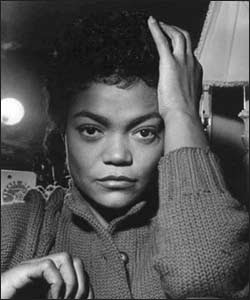
The sultry seductress, Eartha Kitt, who rose to fame in the 1940s in Paris, was one of the biggest stars in the world during the 1950s. Along with a successful recording career, Kitt made numerous appearances on American television during the 1940s and 1950s and appeared in three motion pictures during the decade, The Mark of the Hawk in 1957 and St. Louis Blues and Anna Lucasta in 1958.
9. Diahann Carroll

Diahann Carroll made her start as an entertainer in the 1950s when a friend sent her photograph to Ebony Magazine, which subsequently led to a modeling contract. In 1954, she made her Hollywood and Broadway debuts in the iconic all-Black film Carmen Jones and House of Flowers respectively. In 1959, she appeared in another iconic film with an all-Black cast, Porgy and Bess.
10. Louise Beavers
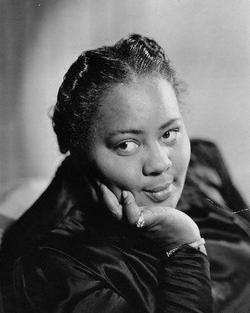
Louise Beavers had a steady and active career in the 1930s and 1940s playing domestics on screen. By the 1950s, she was a well-known and well-respected presence in Hollywood. In 1950, she appeared as the mother of Jackie Robinson in The Jackie Robinson Story alongside Jackie Robinson and Ruby Dee.
Honorable Mentions:
Lena Horne
Carol Channing
The 1930s&40s
1. Dorothy Dandridge

The phenomenal Dorothy Dandridge was the brightest Black star in the universe during the 1950s. A successful actress and singer, with a major career in the nightclubs and supper clubs, her first notable role during the fifties came in 1953's Bright Road, a film that was heralded by the NAACP. On landing the title role in Otto Preminger's all Black 1954 classic, Carmen Jones, Dandridge was catapulted to instant celebrity and became, for a brief time, the highest paid actress, Black or white, in Hollywood. Her performance as Carmen Jones garnered her a 1954 Oscar nomination for Best Actress in a Motion Picture. She was the first Black actress to be so honored. She had a score of other significant films after Carmen Jones, including Island in the Sun in 1957, Tamango in 1958, and Porgy and Bess in 1959. Her last major film in Hollywood was 1960's Malaga. Tragically, she died of a blood clot resulting from an injury in 1965.
2. Pearl Bailey

One of the most successful entertainers of all time, Pearl Bailey began her career as a successful Vaudeville and Broadway actress. By the 1950s, she had emerged in Hollywood as a popular actress and singer,landing the plum role of Frankie, the best friend, in the all Black 1954 classic Carmen Jones. She appeared in three more films that decade,including That Certain Feeling in 1956,St. Louis Blues in 1958,and Porgy and Bess in 1959.
3. Ethel Waters

The legendary Ethel Waters was already a superstar, famous as a Vaudeville and Broadway actress and as a blues singer by the 1950s. With decades behind her in the extent of her fame, in the fifties, Waters adopted the on-screen persona of the matron and saint-a huge contrast from the reputation she had earned as a sultry and seductive Black Venus during the 1920s. She appeared in four films during the decade, The Member of the Wedding in 1952,the all-Black film Carib Gold in 1957,The Heart is a Rebel in 1958, and Sound and the Fury in 1959.
4. Juanita Moore

Juanita Moore rose to instant fame in 1959 playing Annie Jane Johnson, the distraught Black mother of a biracial girl who passes for white in the classic remake, Imitation of Life. She appeared in twenty films during the 1950s, mostly with uncredited appearances. Her most significant roles during the decade include Affair in Trinidad, Witness to Murder,Women's Prison,Ransom! and The Girl Can't Help It.
5. Ruby Dee

A successful Broadway actress and an outspoken Civil Rights activist, Ruby Dee started off the 1950s playing the wife of Jackie Robinson, opposite Jackie Robinson himself, in his 1950 biopic, The Jackie Robinson Story. She appeared in eight more films that decade, including No Way Out in 1950, The Tall Target in 1951, Go Man Go in 1954, The Great American Pastime in 1956, Edge of the City in 1957, St. Louis Blues in 1958, Our Virgin Island in 1959, and the iconic Take A Giant Step in 1959.
6. Beah Richards

The formidable Beah Richards began her career in film during the 1950s. Her first significant role came in the iconic 1959 race drama, Take A Giant Step starring opposite Ruby Dee, Frederick O'Neal, and Johnny Nash.
7. Hazel Scott

Hazel Scott was one of the most prominent African Americans of the 1930s, 40s and 50s. One of the premier pianists of her time, she traveled the world playing classical and jazz music. Scott began appearing in films in the 1940s and by the 1950s was such a popular presence that she earned the distinction of becoming the first Black woman to host her own television show, The Hazel Scott Show, which aired in 1950. Her career waned soon after the start of her television show, however, as she was blacklisted because of her criticism of McCarthyism and her public defense of friends and colleagues who had been targeted by McCarthy and because of her Civil Rights activism. In the 1950s, she appeared in two films, A Bullet in the Gun Barrel and The Night Affair, both in 1958. In 1945, Scott married New York Congressman, Adam Clayton Powell, Jr with whom she had one child,Adam Clayton Powell III. They divorced in 1956.
8. Eartha Kitt

The sultry seductress, Eartha Kitt, who rose to fame in the 1940s in Paris, was one of the biggest stars in the world during the 1950s. Along with a successful recording career, Kitt made numerous appearances on American television during the 1940s and 1950s and appeared in three motion pictures during the decade, The Mark of the Hawk in 1957 and St. Louis Blues and Anna Lucasta in 1958.
9. Diahann Carroll

Diahann Carroll made her start as an entertainer in the 1950s when a friend sent her photograph to Ebony Magazine, which subsequently led to a modeling contract. In 1954, she made her Hollywood and Broadway debuts in the iconic all-Black film Carmen Jones and House of Flowers respectively. In 1959, she appeared in another iconic film with an all-Black cast, Porgy and Bess.
10. Louise Beavers

Louise Beavers had a steady and active career in the 1930s and 1940s playing domestics on screen. By the 1950s, she was a well-known and well-respected presence in Hollywood. In 1950, she appeared as the mother of Jackie Robinson in The Jackie Robinson Story alongside Jackie Robinson and Ruby Dee.
Honorable Mentions:
Lena Horne
Carol Channing
The 1930s&40s
Subscribe to:
Posts (Atom)